The New Zealand Marine Biosecurity Porthole has been developed to allow biosecurity managers, researchers and members of the public access to information on unwanted marine pests and other non-indigenous marine organisms that have been recorded from New Zealand waters. It houses data from the national series of Port Biological Baseline Surveys, Marine High Risk Site Surveillance, the Marine Invasives Taxonomic Service and other verified observations of non-indigenous species. The New Zealand Marine Biosecurity Porthole features:
Between 2001 and 2007 a series of marine biological surveys was undertaken at ports and marinas throughout New Zealand that are points of entry for international shipping. The surveys provided baseline information on the indigenous and non indigenous species present in each maritime transport node including their identity, distribution, and relative abundance.
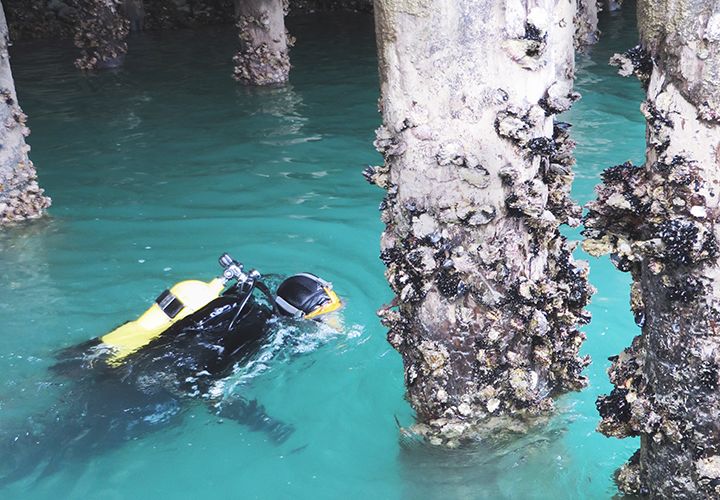
The Marine High Risk Site Surveillance programme undertakes 6 monthly surveys for unwanted marine pests in some of New Zealand's busiest and, therefore, high-risk ports and marinas of first entry for international vessels. The programme’s key objective is to detect potentially invasive and harmful marine animals and plants early enough to maximise the chance of removing or controlling them. It is also designed to detect the spread of established pests to previously uninfested locations
The Marine Invasives Taxonomic Service (MITS) is a centralized service that provides taxonomic identification and collection management of marine organisms (indigenous, cryptogenic, or non-indigenous) relevant to marine biosecurity management in New Zealand. It delivers identification services for all MAF Biosecurity New Zealand marine surveillance activities, including port biological baseline surveys, high risk site surveillance, biofouling surveys, border interceptions and passive surveillance. MITS is funded by MAF Biosecurity New Zealand and its services are provided by the National Institute of Water and Atmospheric Research (NIWA).
Reports of non-indigenous species can come from a variety of sources. In 1998 a team of New Zealand marine scientists published a consolidated inventory of all of the non-indigenous and cryptogenic species that had been recorded from New Zealand marine environments. Since that time, the number of non-indigenous and cryptogenic marine species recorded in New Zealand has more than tripled as a result of surveys funded by MAF-Biosecurity New Zealand, other biodiversity-related research, and reports made by members of the public. In 2010, a comprehensive review of existing data turned up records for more than 650 non-indigenous and cryptogenic marine species from New Zealand waters.
Species records from all the above four datasources will be displayed on the project map.